

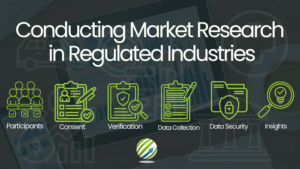
When launching a study in regulated sectors such as healthcare or the public sector, assuming data collection is automatically compliant can be a costly mistake. Many organizations only realize their protocol integration is weak when fieldwork is delayed, findings face scrutiny, or internal reviews create bottlenecks. To avoid this, it requires proactive planning, not just checking boxes at the end of a project.
In high-stakes industries, compliance failures don’t just damage your data quality. They can result in legal liabilities, budget waste, and a complete loss of stakeholder credibility.
By recognizing the primary operational pitfalls in data collection, buyers can better prepare their methodologies and understand exactly what to expect from an outsourced fieldwork provider.
What You’ll Learn
In this article, we’ll highlight:
- Why ethics clearances must be clear before recruitment begins
- The risks of using general consumer panels for highly specialized or vulnerable audiences
- How data privacy protocols must be structured when collecting information across international borders
- The impact of local and regional guidelines on national study execution
- How structured fieldwork tracking supports your broader organizational compliance goals
1. Launching Recruitment Without Clear Ethics Clearance
Market research ethics and consent requirements depend on the study type, participant group, data sensitivity, and jurisdiction. A generic consent form may not properly explain how data will be used, whether participation is voluntary, how withdrawal works, or what risks exist for the participant.
In Canada, TCPS 2 states that consent in human research should be free, informed, and ongoing. It also notes that participants can withdraw consent at any time, subject to specific limits that should be explained during the consent process.
Weak consent can lead to stakeholder pushback, ethics board questions, rejected findings, or rework after fielding has already started. It is critical to ensure ethics approvals and establish market research consent frameworks before the work begins to avoid these risks.
2. Relying on Unqualified Panels and General Populations
Using generic consumer panels for studies requiring healthcare professionals, specific patient groups, or specialized public sector audiences can lead to invalid data and audit exposure. Hard-to-reach populations require vetted, sector-specific recruitment sources with accurately documented participant profiles. Poor recruitment can compromise data quality before the first interview is complete.
When studies require feedback from specialized audiences or representatives, general panels often rely on unverified self-reporting. A professional fieldwork provider avoids these general pools entirely, maintaining distinct, pre-vetted databases where participant identities, credentials, and demographics are meticulously verified prior to study assignment.
For regulated studies, buyers should ask how participants are sourced, qualified, screened, documented, and protected. The right partner should be able to explain respondent eligibility, recruitment channels, consent handling, and any added safeguards for sensitive audiences.
3. Mishandling Market Research Data Privacy and Security
Storing personally identifiable information in non-secure systems or operating with vague data retention policies can result in heavy fines, breach reporting, and a total loss of stakeholder trust. Your field provider must have clear, documented data security pipelines explaining exactly how respondent information is shielded during the active collection process.
True market research data privacy means choosing a data partner that operates under recognized global security standards. When fielding international or highly sensitive studies, data handling must respect the exact boundary lines of the target audience’s region.
Before selecting a provider, ask where participant data is stored, who can access it, how long it is retained, how transfers are handled, and when it is deleted.
To review the exact legal frameworks governing these data practices, you can consult the official regulatory resources below:
- Review the official Government of Canada PIPEDA Brief to understand current Canadian private sector data privacy laws.
- Consult the European Commission GDPR Rules for handling the data of European Union residents.
- Examine the U.S. Department of Health and Human Services HIPAA Research Guidelines regarding health information privacy in research.
- Check the Tri-Council Policy Statement on Ethical Conduct (TCPS 2) for Canadian ethical requirements involving human participants.
4. Overlooking Local and Regional Regulations
Market research compliance can shift by region, language, client type, and audience. Executing studies across Canada, for instance, introduces unique regional expectations, bilingual requirements, and local public sector sensitivities.
For example, ignoring Quebec language requirements or regional procurement nuances can result in bid disqualification, incomplete data sets, or respondent complaints.
A qualified national fieldwork provider understands that a one-size-fits-all approach doesn’t work. They will ensure that recruitment protocols are tailored to regional standards, utilizing fully multilingual moderation and culturally competent outreach to ensure high response rates and legally sound participation across all areas.
5. Gaps in Fieldwork Tracking and Record Keeping
If internal reviewers, procurement teams, or regulators question a study’s process, a lack of clear tracking leaves the research team unable to defend the study’s integrity. Organizations must ensure that field-level activities are thoroughly accounted for to protect the broader study trail.
While the final master audit package is maintained by the client, your data collection partner must maintain flawless internal tracking during the operational phase. A high-quality provider tracks active participant engagement, logs confirmation protocols, and preserves exact operational records so that you receive clean, verifiable data strings that seamlessly integrate into your master compliance files.
For buyers, this is one of the simplest ways to assess provider readiness. Ask what documentation will be available at the end of the project and what can be reviewed before fieldwork starts.
How Decision Point Research Supports Your Study Integrity
A successful project depends on a fieldwork partner that executes data collection according to your exact parameters. Decision Point Research specializes in field execution, delivering the clear data foundation your internal protocols require.
Our team supports your study through targeted operational capabilities:
- Proprietary Niche Panels Instead of unverified general consumer pools, we utilize specialized databases across healthcare, government, and B2B technology to connect you with verified respondents.
- Multilingual Fielding Capabilities Decision Point Research applies deep cultural and regional expertise to satisfy local public sector requirements and national linguistic expectations, with capabilities in multiple languages.
- Traceable Fieldwork Records Decision Point maintains comprehensive participant logs and secure session recordings for all studies to support your broader tracking goals.
Safeguarding Your Fieldwork Strategy
The most costly compliance mistakes usually happen before fieldwork begins. Ethics review, market research consent, qualified recruitment, privacy safeguards, local regulation, and documentation all shape whether the findings can be trusted.
Protecting your study from preventable compliance failures requires active collaboration and clear boundaries of responsibility. From securing proper internal ethics approvals to executing precise multilingual recruitment and maintaining secure data pipelines, compliance directly dictates data quality. Choosing a field partner with built-in privacy practices and specialized audience access ensures your study delivers legally sound, actionable insights.
Planning a healthcare, public sector, or regulated research study in 2026? Talk to Decision Point Research before fieldwork begins to ensure your recruitment, data privacy, and fieldwork tracking are aligned for success from the very start.
Frequently Asked Questions
What are the main market research regulations to follow in Canada?
Studies operating in Canada must adhere to the Personal Information Protection and Electronic Documents Act (PIPEDA) for data privacy, as well as specific regional language guidelines, particularly in Quebec. For institutional or healthcare studies, compliance with the Tri-Council Policy Statement (TCPS 2) guidelines is also necessary.
Who is responsible for securing ethics approval in market research?
The end-user client or brand is responsible for obtaining necessary Institutional Review Board (IRB) or Research Ethics Board (REB) approvals before recruitment begins. The data collection partner then executes the fieldwork in strict alignment with those pre-approved frameworks.
How does data privacy impact healthcare market research?
Healthcare research involves sensitive patient or practitioner data, meaning providers must use secure pipelines that comply with frameworks like HIPAA or GDPR. Failing to secure this data can result in severe fines, legal liability, and the invalidation of the entire study.


 10K+ Customers Worldwide




 Or call us at