
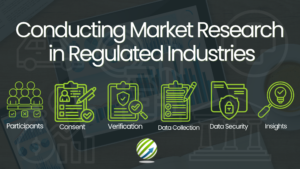


Research in regulated industries involves far more than selecting a methodology and recruiting participants. Every stage of a study – from recruitment and consent to data storage and reporting – has to operate within legal and ethical frameworks that protect participant information and ensure the integrity of the research process.
Organizations conducting market research in regulated industries navigate regulatory frameworks such as HIPAA in the United States, GDPR in Europe, and PIPEDA in Canada. These laws determine how participant information can be collected, stored, and transferred. When research involves healthcare professionals, government audiences, or confidential product development, compliance requirements also extend to credential verification, ethics approvals, and more.
Privacy regulation continues to scale, as well. According to Usercentrics, 79 percent of the global population is now covered by modern privacy legislation across 144 countries. This means organizations running international research must operate under multiple regulatory frameworks at the same time.
For research teams, compliance is more than a legal requirement; it directly affects how studies are designed, how participants are recruited, and how insights can ultimately be used.
This guide explains the risks associated with regulated research environments and outlines how organizations can conduct compliant studies while protecting both participant data and project integrity.
What You’ll Learn
- Why regulated industry research requires additional planning and operational safeguards
- How privacy regulations influence study design and data management
- The operational risks that commonly compromise regulated research studies
- How recruitment verification protects the quality of research insights
- What sector-specific compliance requirements look like in healthcare, government, and automotive studies
- How to evaluate whether a research partner has the expertise required for regulated environments
Why is market research in regulated industries more complex?
Market research is more complex when studies involve sensitive data, specific types of professional participants, or controlled product development environments. In these cases, regulatory frameworks affect not only how research is conducted, but whether it can proceed at all.
You’ll often see complex regulations in industries like healthcare, government, automotive, financial services, and pharmaceuticals.
For example, many healthcare studies completely separate participant identity from research responses. Participant contact information is stored in restricted databases, while survey responses or interview transcripts are anonymized before analysis begins. This separation ensures that no personally identifiable information can be linked directly to the research dataset.
These safeguards protect participant privacy while ensuring the resulting research remains usable within regulatory boundaries.
What regulations affect market research?
Several regulatory frameworks influence how research data is collected, stored, and used.
These regulations exist to protect individuals whose information is being collected during research studies.
| Regulation | Region | Impact on Market Research |
|---|---|---|
| HIPAA | United States | Protects patient health information and governs healthcare data handling |
| GDPR | European Union | Establishes strict personal data protection requirements |
| PIPEDA | Canada | Regulates how organizations collect and use personal information |
| IRB or REB | Global research institutions | Reviews the ethics of studies involving human participants |
Regulatory enforcement has increased significantly in recent years. GDPR enforcement alone produced more than $4.8 billion in fines in 2024, reflecting regulators’ growing willingness to penalize organizations that mishandle personal data.
For research teams, these regulations shape data storage, recording of interviews, participant consent procedures, and more.
What are the most common market research compliance risks?
Many compliance failures occur because organizations underestimate the operational complexity of regulated research.
The most frequent risks include issues with recruitment, consent procedures, and data security.
| Risk Area | Example Issue | Potential Consequence |
|---|---|---|
| Participant recruitment | Unverified healthcare professionals or patients | Inaccurate or unusable research data |
| Consent procedures | Missing informed consent documentation | Study findings may be invalid |
| Data security | Sensitive data stored without adequate protection | Privacy violations |
| Language compliance | Research not adapted for Quebec language requirements | Regulatory complaints |
| Documentation | Missing procurement or ethics documentation | Project delays |
Recruitment verification is particularly important in regulated industries.
Studies involving physicians or healthcare administrators typically require credential verification before participants are invited to participate. Recruitment teams confirm medical license numbers, institutional affiliations, or professional specialties using publicly available registries.
Without this process, research may include individuals who misrepresent their professional credentials. While these participants may appear legitimate during screening, their responses can compromise the reliability of the findings.
Organizations working with professional participant recruitment panels can significantly reduce these risks by ensuring participants are verified and qualified.
How to avoid compliance mistakes in market research?
Avoiding compliance failures requires planning well before recruitment begins. Organizations running regulated research studies should establish clear operational safeguards.
Verify participant credentials
Studies targeting physicians, engineers, or government officials must confirm that participants hold the qualifications they claim. Verification often includes checking licensing databases or professional registries before recruitment is finalized.
Separate identifiable data from research responses
In many regulated studies, participant contact information is stored separately from survey responses or interview transcripts. This separation ensures that research datasets cannot be linked to individual participants.
Implement secure data storage protocols
Research data should be stored within controlled environments with restricted access. Access is typically limited to project teams responsible for analysis and reporting.
Establish documented consent procedures
Participants must clearly understand how their information will be used, whether sessions will be recorded, and how long data will be retained.
Plan for regional regulatory requirements
Research conducted in Canada frequently requires bilingual execution in English and French. In Quebec, for example, language laws may require French materials when recruiting participants.
When these safeguards are integrated into project planning, research teams avoid delays and ensure studies remain compliant.
How Decision Point Research Builds Compliance into Every Study
Organizations operating in regulated industries require research partners who understand these operational realities.
Decision Point Research integrates compliance safeguards throughout the research process.
Industry compliance standards
Research operations align with internationally recognized standards, including ESOMAR and the CRIC, ensuring all studies follow established ethical and privacy guidelines.
Secure data handling protocols
Participant information is managed through controlled data environments designed to protect sensitive information.
Verified recruitment panels
Proprietary panels enable the recruitment of verified participants, including healthcare professionals, multicultural audiences, and specialized B2B populations.
Multilingual research capabilities
Research teams support studies conducted in multiple languages, ensuring that recruitment, moderation, and translation meet regional requirements.
Specialized research facilities
Controlled research environments allow confidential studies to be conducted securely, particularly when evaluating products or prototypes.
These capabilities ensure research projects can proceed without exposing organizations to unnecessary regulatory risk.
What Compliance Factors Matter in Healthcare, Government, and Automotive Research
Each regulated sector introduces unique operational requirements.
Understanding these sector-specific considerations helps organizations design compliant research programs.
Healthcare Research
Healthcare studies frequently involve physicians, patients, or hospital administrators.
Patient privacy regulations restrict how health-related information can be collected and stored. Research responses must be separated from identifiable patient data, and participants must understand how their information will be used before they agree to participate.
Recruitment verification is also critical. Many healthcare studies target highly specialized professionals such as oncologists, hospital administrators, or clinical researchers. Confirming professional credentials ensures the research sample accurately reflects the intended audience.
Healthcare data remains one of the most targeted information types in cyber incidents. In 2023 and 2024 alone, more than 289 million individuals were affected by healthcare data breaches. This highlights the sensitivity of medical data and the importance of secure data practices.
Government Research
Government research projects introduce procedural and documentation requirements that differ from commercial studies.
Public sector organizations often require transparent procurement processes, detailed project documentation, and accessibility compliance for participant communications.
Recruitment strategies may also need to reflect regional demographics, particularly when studies are designed to capture public opinion within specific municipalities or provinces.
Because these projects frequently involve public accountability, research processes must remain transparent while still protecting participant privacy.
Automotive Research
Automotive research often involves confidential product development and prototype testing.
Participants may be asked to evaluate vehicle designs, new features, or emerging technologies. These studies frequently require non-disclosure agreements and controlled research environments that prevent photography or external recording.
Central location testing facilities are commonly used for this type of research because they allow prototypes to be evaluated within secure environments while researchers observe participant reactions in real time.
How do I choose a compliant market research partner?
Selecting a research partner for regulated studies requires evaluating more than research capabilities alone.
Organizations should assess whether potential partners can demonstrate operational experience within regulated environments.
Important questions include:
- How is participant data stored and secured?
- Are you familiar with [industry name] regulatory frameworks?
- Does the provider have experience in regulated sectors?
- How are participant credentials verified?
- What consent documentation is provided to participants?
- How are multilingual and regional compliance requirements handled?
- Can compliance documentation be provided when required?
Research partners who cannot clearly answer these questions may expose projects to unnecessary risk, including fines, project delays, and potential PR fallout, making it all the more important to make sure you’re working with a market research partner who will get it right.
Have Confidence in Your Market Research in Regulated Industries
Organizations conducting research in regulated industries operate in an environment where compliance requirements are expanding, and data security expectations continue to rise.
Research studies involving healthcare professionals, government audiences, or confidential product development require specialized safeguards that extend well beyond traditional market research practices.
By integrating credential verification, secure data management, and regulatory expertise into the research process, organizations ensure their studies remain compliant while producing reliable insights.
Decision Point Research supports organizations operating in healthcare, government, automotive, and other regulated sectors with expertise in secure, compliant data collection services. If your next research project involves sensitive participant data or regulated audiences, start by exploring our services or contact our team to discuss your upcoming study.
Frequently Asked Questions About Market Research Compliance
What is regulated industry market research?
Regulated industry market research refers to studies conducted in sectors where laws or ethical frameworks control how participant data is collected, stored, and used. These sectors often include healthcare, government, automotive, and financial services.
In these environments, research teams must implement safeguards such as participant credential verification, secure data storage, and clearly documented consent procedures. These safeguards ensure that research insights remain reliable while protecting participant privacy and organizational compliance.
What regulations affect market research?
Several privacy and ethics frameworks influence how market research is conducted, depending on the region and type of data involved.
Common regulatory frameworks include:
- HIPAA in the United States for healthcare data
- GDPR in the European Union for personal data protection
- PIPEDA in Canada for commercial data collection
- IRB or REB oversight for research involving human participants
International research projects often operate under multiple frameworks simultaneously. This requires research teams to design studies that meet the most restrictive regulatory requirements across jurisdictions.
Why is compliance so important in healthcare market research?
Healthcare research frequently involves sensitive patient information or specialized professional audiences such as physicians and hospital administrators.
Compliance safeguards protect both participants and the credibility of the research. Privacy regulations restrict how health-related data can be stored and shared, while credential verification ensures participants actually practice in the relevant specialty.
Without these safeguards, research findings may be considered unreliable or unusable for strategic decision-making.
What are common compliance mistakes in market research?
Compliance failures often occur because organizations underestimate the operational complexity of regulated research environments.
Common issues include:
- recruiting participants without verifying professional credentials
- unclear or incomplete participant consent documentation
- storing identifiable participant data alongside research responses
- overlooking regional requirements such as bilingual research in Canada
These issues can invalidate research findings or delay projects if compliance concerns are identified after the study has begun.
How do you choose a compliant research partner?
Organizations should evaluate research partners based on operational experience in regulated environments rather than methodology alone.
Key indicators of compliance expertise include:
- secure data management procedures
- verified recruitment processes for specialized audiences
- experience navigating privacy legislation and ethics reviews
- multilingual capabilities for region-specific studies
A compliant research partner should function as an operational safeguard that ensures studies meet regulatory requirements while producing reliable insights.


 10K+ Customers Worldwide




 Or call us at